Our disconnect from hands-on living
Did you ever think about how disconnected most of us are from the processes that sustain our lives? Food…air…water…clothing…shelter. Those are the things that keep us alive. Without any one of them, we wouldn’t last long, but most of us outsource them all.
We spend so much of our lives in homes and offices with artificial air brought to us through heating and cooling systems. Our water comes through a system of reservoirs and pipes and ducts and, we hope, effective filtration plants. Our clothing is made in far-off places, and few of us consider the sources of the fiber that forms fabrics or the dyes, the processes, the people behind the hands involved in the work or the transportation that brings the garment to a local store. And not many of us build our own homes, that’s for sure! What is drywall made of, where does it come from? Insulation, siding, window panes? Before it even gets to the builder, the elements of our homes have passed through many hands and traveled much ground.
How about food? What most of us know is that it comes from boxes and bags we get at the supermarket, sometimes so disconnected from its source that it’s not even food anymore. We don’t know where it grew or how, who nurtured it, who harvested it, their names or what their lives are like. Nor do we know the animals behind the flesh pieces wrapped neatly in styrofoam and plastic, their names, how they lived during their unnaturally short lives, what they experienced and felt. Or even how items in the supermarket got from the ground or factory farm to the supermarket or what resources went into making that happen. We have nothing to do with any of it. We often don’t even connect with our food at the very end of the supply chain, in our homes, cooking it.
Does this disconnect change us?
I sometimes wonder how this disconnect from the basic work of being alive changed our psyches. Surely it did. Surely there is a difference between a person who grows up drinking fresh water from a mountain stream, water they get for themselves by cupping their hands or making an earthen vessel to scoop it in and a person who turns on a tap and has no idea where the water originated or what might have been added to it or removed from it. As the example of Flint, Michigan teaches us, we can’t always trust what comes to us through intermediaries. There has to be a psychological difference between living your life experiencing water as pure and life-giving or experiencing it as a source of distrust and uncertainty.
There has to be a difference between people who sit down together to share a meal they worked hard to bring from the earth and then cooked and served, and grabbing some commercial food product on the fly and eating it in isolation. Even more so as we learn these products we thought were safe and nutritious are causing devastating diseases.
What massive shifts in worldview might we attribute to this change in how we manage our basic necessities?
Hands-on experimentation
Many years ago, I discovered something quite by accident: I felt better when I cooked my own food from real, whole plant foods. I felt better yet when I grew the trees and plants, then cooked their gifts into something I knew was tasty and nutritious. I don’t just mean physically better, although there was that. But there was a spiritual component. Perhaps it was participating in the cycle of life, experiencing myself as part of something much bigger than myself.
I felt spiritually fulfilled, content, occasionally exhilarated. Grateful. Whole in a way I never felt when I turned on the tap or or picked up one of those styrofoam and plastic wrapped packages in the store.
I wonder, would the world’s great religions with their profound insights ever have emerged if people two, three and four thousand years ago been able to outsource their basic needs? Turn on a tap? Or did it require that different pace, a constant drawing from the sources, to generate the creativity that inspired the Bible and Hinduism and other ancient religions?
These are a few of my favorite things…to do
Since I made my discovery so many years ago, I’ve tried to keep things in my life that allow me to live hands-on:
- When I had children, I encouraged them to make food with me so they could see where it comes from. This included simple things like making our own yogurt and our own lemonade. I had a funny experience once in my cafe with kids who had been raised on lemonade mixes.
- I planted a veggie garden in our suburban back yard so my kids could experience food coming from the ground to their table.
- Wanting to expand on that experience, I encouraged us to get a farm in a beautiful area three hours from where we lived. We spent many happy days there with a very large organic veggie garden and orchard. We also foraged for asparagus and mushrooms and wild apples and berries, nuts and seeds, and edible leaves and roots and flowers. We hobnobbed with animals too large to keep in the suburbs, and we found and kept an unwanted puppy.
- Then I could no longer go to the farm and had to work long hours in the city. I promised myself that my next job would be outdoors and physical. It was. I bought a food trailer and cooked and served up fresh Middle Eastern style veggie foods at festivals. Then I moved into a cafe and did the same.
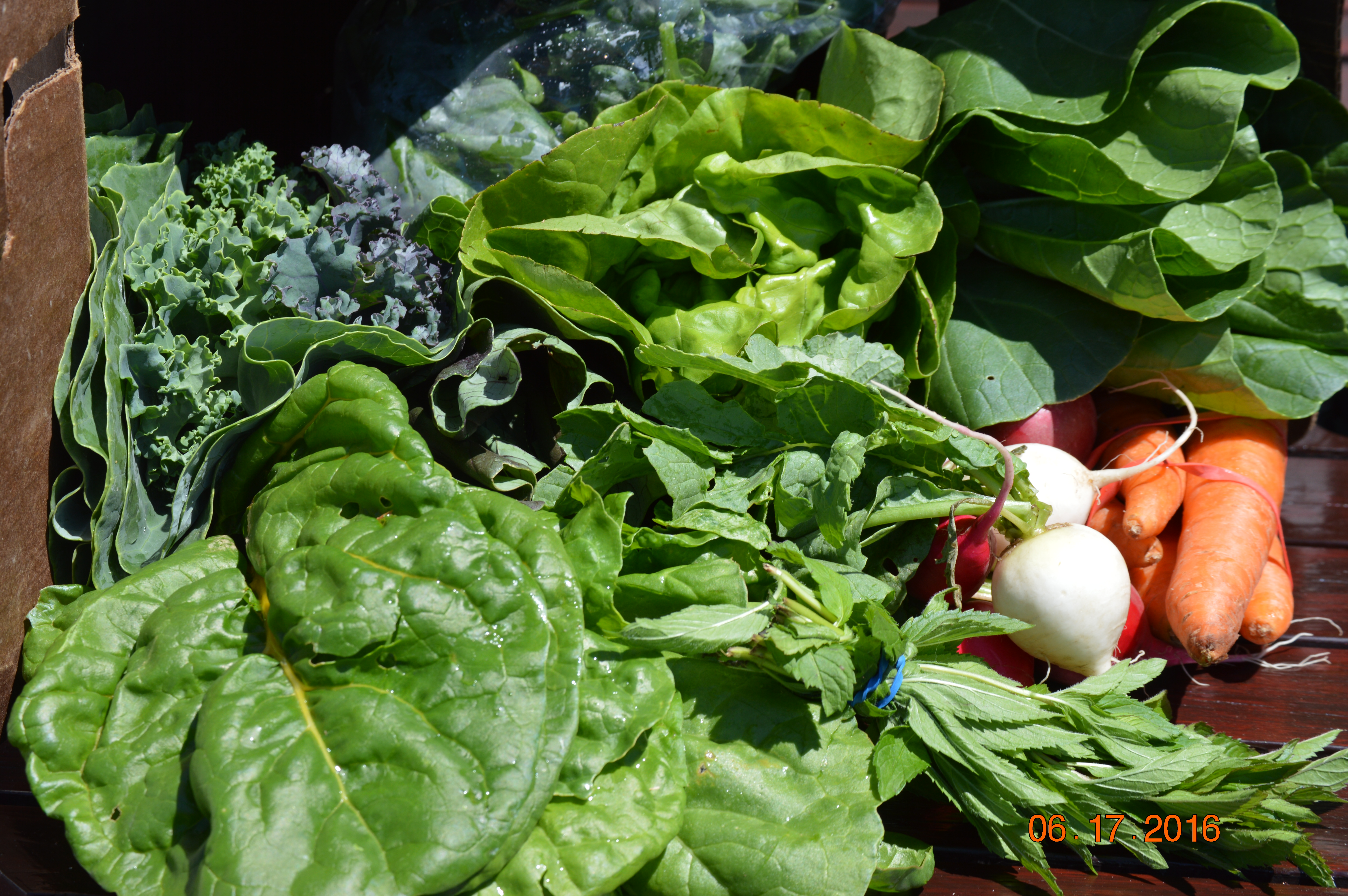
- When I sold the cafe, I had the good fortune to discover a farmer in my area who operated a CSA (Community Supported Agriculture). At first I thought I might just do as most people do, buy a share, receive a 3/4 bushel box of produce each week and experience the changing season through the produce and the foods I would make with it. Then I noticed they had a worker’s share, and I signed on for it. For three years I helped with the seeding, planting, weeding, harvesting, washing and packing. It was hard work, but it filled my soul.
- My next move will be into a house where I can control my own yard, which I hope to rewild. I think these HOAs should do that instead of planting lawns and dumping fertilizers and pesticides on them. It would be less expensive for them and better for us and the planet.
- And I won’t put a breakfast bar into that house. I want a table, a real table, one that holds real food that real people can sit down to enjoy together while they look at each other.
- “Oh, and one last thing…or at least it will be the last thing when it happens. I became a founding member of an organization called Transcend — https://www.wetranscend.com/. Here’s how they describe themselves: “Reforesting the world by planting people and pets as trees when they die.” It is “47% less expensive than traditional deathcare in the U.S.” and “476% more sustainable than cremation.” And the resource which is my body will feed the planet instead of becoming part of our cultural waste.
I’m not much of an activist, but these are small things I was able to bring into my everyday life to keep me aware of my relationship to life and to the planet, and to stay connected physically, spiritually, and emotionally to life and sustainability here in the moment.
For more, visit my blog, vegetatingwithleslie.org, “Like” me on FaceBook/Vegetating with Leslie or follow me on Twitter, @vegwithleslie.